Claudia Mónica Ferradas
Videos & Podcasts
Videos & Podcasts
How Humanism has Changed My Work. Claudia Ferredas, HLT Digital 2023.
What Humanism Means to Me. Claudia Ferredas, HLT Digital 2023.
Eteachingonline. 2010. PPD April 2010 Claudia Ferradas.
WordPowered. 2011. Claudia Ferradas at APPI.
FAAPI Conference. 2013. Communicating Across Cultures: Encounters in the ‘Contact Zone’. FAAPI Conference, Buenos Aires.

FAAPI Conference. 2014. ‘Do We Not Bleed?’ Developing Empathy and Intercultural Awareness in the English Class’. FAAPI Conference.
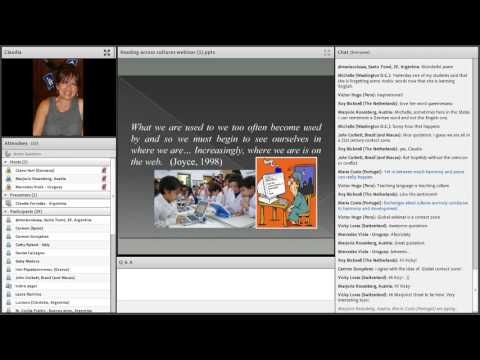
IATEFL Talks. 2016. IATEFL Webinar with Claudia Ferradas - 31 August 2013.
IATEFL. 2016. Ourselves in English: Focusing on Identity in Language Teaching. IATEFL Chile International Conference.
The Company Educational Drama. 2016. Reflections on the Way in Which the Arts Influence Language Teaching. The Company Educational Drama.
British Council.2020. Dressed in Borrowed Robes: Telling our Stories in a Foreign Language. British Council.
Conversaciones Sobre Lenguas. 2021. Entrevista a Griselda Beacon, Susana Company, Claudia Ferradas, Adriana Lang y María Laura Spoturno.
TESOL Greece Poetry performance by Luke Prodromou. 2023. Teacher: Alan Maley with Claudia Ferradas.
2014. Ric Tercero. Testimonial - Claudia Ferradas
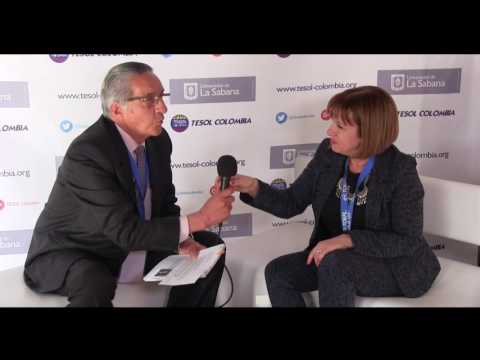
2017. TESOL Colombia. Interview with Claudia Ferradas at TESOL Colombia II
2018. TransformELT Consultancy. Claudia's Story: An Unplanned Career
2018. Centro PEN Argentina. Claudia Ferradas y la libertad de expresión

Multilingual poetry and drama podcast on Spotify
10 podcast episodes on YouTube - playlist
CD-ROM
2003. Claudia Ferradas. Words on Words – Contemporary UK Literature and the Screen. A selection of extracts from Mr Wroe’s Virgins by Jane Rogers and poems by Simon Armitage, with suggested activities for teachers. The British Council.
Claudia Mónica Ferradas
Recommended books
Literature with a Small ‘l’.
John McRae.
A watershed in my career. It provided a way to articulate my interest in including literature in language teaching without contradicting the aims of the communicative approach.
Hypertext: the Convergence of Contemporary Critical Theory and Technology.
George P. Landow.
A fascinating new way of looking at language and literature though the introduction of what was then a completely new technology. Now outdated, but still valid in its critical consideration of the interface between literature and technology.
Context and Culture in Language Teaching.
Claire Kramsch.
The book which made me rethink my practice and integrate cultural studies into my teaching and research. I still quote from it again and again, especially focusing on the idea that the central aim of language education is to address "the problem of wanting to express one world view through the language normally used to express another society’s world views".
Teaching and Assessing Intercultural Communicative Competence.
Michael Byram.
A thorough look into the implications of an intercultural approach, offering a theoretical framework which is still highly influential.
An Intercultural Approach to English Language Teaching.
John Corbett.
Classroom activities and projects to put an intercultural approach into practice.
Place in HLT
I first encountered Claudia when she was a student on the Masters course in Professional Development for Language Education run by NILE with the University of East Anglia. In a particularly strong group, she stood out as a practitioner whose work was already distinguished by an avid intellectual curiosity and a profound commitment to professional learning and personal development. The Masters course was modular, so we only coincided for part of the programme, but in the years that followed, we became close colleagues, finding common ground in our shared beliefs about the value of literature and its role in promoting intercultural understanding. We continued to collaborate, on successive trips to Argentina, where she organised talks and workshops for me and introduced me to tango (watching, not dancing!); then in the early years of the British Council’s Brit Lit project, working with groups of teacher-writers from APPI, the Portuguese teacher association; teaching together on a Masters course at the University of Alcalá de Henares; and most memorably, for five years as co-chairs of the British Council Oxford Conference on the Teaching of Literature. Claudia’s interest in the intercultural experience, whether at the macro-level of immigrant communities or the small cultures of the classroom, her concern with the representation of cultural identity through literary voices, and her own personal exploration of voice through poetry and song, have combined to make it a particular pleasure to work alongside her for the past twenty-five years. Claudia’s work is always characterised by her engagement with texts and what they tell us about human experience, and with ways to inspire learners, whether students or teachers, to become part of an intercultural dialogue.
