Alan Pulverness
Videos & Podcasts
Videos & Podcasts
Advice to Teachers in Supporting and Guiding Learners. Alan Pulverness, HLT Digital 2023.
Associating 'Teacher Awareness' with a 'Learning-centred' Approach. Alan Pulverness, HLT Digital 2023.

Culture and its Role in the Classroom. Alan Pulverness, HLT Digital 2023.
Helping Learners to Gain more Confidence. Alan Pulverness, HLT Digital 2023.
Helping Learners who find it Difficult to Speak. Alan Pulverness, HLT Digital 2023.
My Work with TransformELT. Alan Pulverness, HLT Digital 2023.
What Humanism Means to Me. Alan Pulverness, HLT Digital 2023.

E-merging Forum 4. 2014. The Ghost at the Banquet: The Use and Abuse of Literature in the Language Classroom. British Council, Moscow.
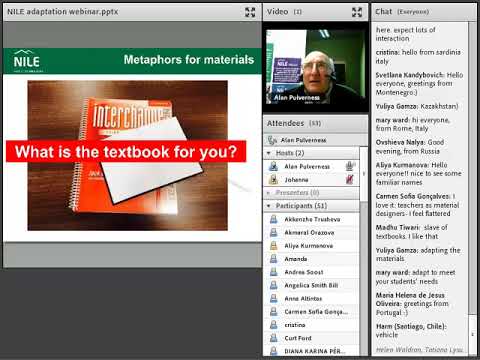
NILE ELT. 2016. Think Globally, Act Locally - Adapting Published Materials.
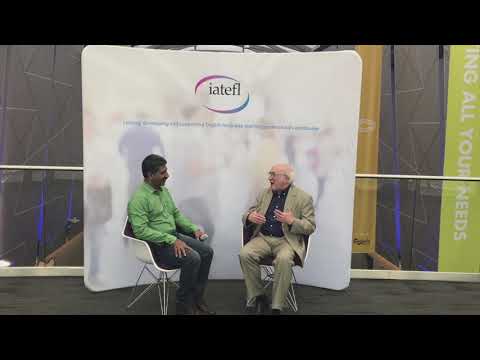
IATEFL Talks. 2019. IATEFL 2019 - Alan Pulverness.
Teacher Development Webinars. 2020. Classroom Research and the Whole Teacher.

2023. New Directions East Asia. Embedded Formative Assessment (New Directions)
2023. Pharos University in Alexandria. Something to Say: The Role of Literature in the Language Classroom
Other videos
2013. British Council, Moscow. BritLit Russia: Meet the Team. (source)
Alan Pulverness
Recommended books
Pedagogy of the Oppressed
Paulo Freire
The book that has inspired the turn towards critical pedagogy. Freire’s case for a dialogic approach to education, as opposed to what he called the ‘banking’ model (where knowledge is ‘deposited’), made me think deeply about the why and the how of teaching and learning.
Context and Culture in Language Teaching
Claire Kramsch
A book about teaching and learning languages, gaining insights from literature and cultural encounters in what Kramsch calls ‘third places’ (interlingual and intercultural spaces). Immensely readable, it weaves the author's ideas about language and learning together with a kind of professional autobiography.
The Lexical Approach
Michael Lewis
A wonderfully disruptive book that challenged the prevailing centrality of grammatical form in ELT syllabus design with Lewis’s proposal that crucially, we should think about language as ‘grammaticalised lexis’ and not ‘lexicalised grammar’.
Textual Intervention
Rob Pope
Written by a university professor for a readership of university teachers and students of literature, Pope’s practical proposals for creative response activities (which he describes as ‘serious fun’) will be instantly recognisable to teachers at all levels. As the title suggests, the approach consists of inviting learners to put themselves in the writer’s shoes and experiment with every kind of choice facing the writer - playfully intervening and changing genre, plot, setting, character, language - in order to see the effects of their interventions, and in so doing to gain a deeper appreciation of the original text.
Understanding Language Teaching
B. Kumaravadivelu
In this highly original overview of language teaching methodology, Kumaravadivelu presents a comprehensive model, synthesising various progressive trends in thinking about ELT and reframing them in his own ‘post-method’ model. A hugely important book that has not received its due recognition.
Place in HLT
To Alan, humanism means respect for people as individuals with individual histories and ambitions, and hopes and fears and dreams, rather than as students or teacher trainees. It’s also being aware of who's in the room and where they've come from - what kind of beliefs, assumptions and values they bring with them and how that affects your choices and your strategies as an educator. It’s similar to creating materials and being aware of context. It's being aware of readership or usership, not assuming that you've got the answers, and approaching every project - and every learner - with the right questions. When it comes to assessment, humanism is giving learners opportunities, empowering them to make choices, and select the work that they would like to have assessed.
